

















In today's rapidly developing world of globalization and e-commerce, the supply chain has evolved from a simple "production transportation sales" chain to a complex network spanning multiple countries and involving countless participants. At the same time, the risks faced by products in the circulation process have also increased sharply: from counterfeiting and shoddy products in the manufacturing process, to unauthorized unpacking and repackaging during transportation, to malicious returns and smuggling at retail terminals. These behaviors not only erode brand profits, but may also endanger consumer safety and even trigger large-scale lawsuits and brand reputation collapse. In this context, Tamper Expert Technology has transformed from an additional feature to a core infrastructure that ensures the security and integrity of modern supply chains.
The essence and types of tamper proof technology
The core goal of tamper proof technology is very clear: to leave irreversible and easily recognizable physical evidence of any unauthorized opening, dismantling, or replacement behavior. According to application scenarios and destruction mechanisms, mainstream tamper proof technologies can be divided into the following categories:
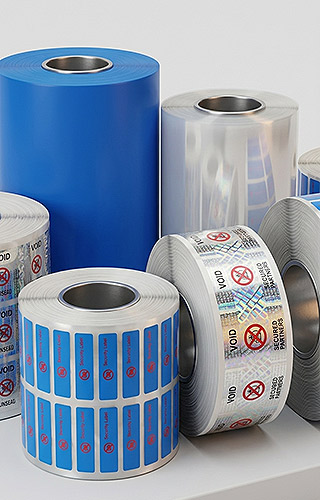
Destructive marking materials: such as easily shredded paper labels, fully transferred/non transferred/partially transferred anti-counterfeiting materials. Once lifted, the label itself will be completely destroyed, and the preset "VOID", "OPENED" or customized patterns will be completely transferred to the surface of the object being pasted, preventing secondary use.
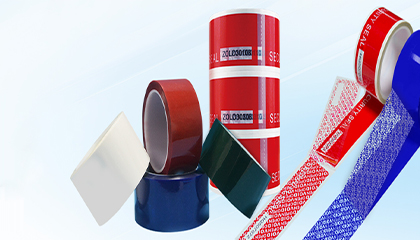
Explicit/implicit tamper proof structures: such as three-layer composite tamper proof bags and security seals. By utilizing the difference in interlayer adhesion, delamination occurs when opened illegally, revealing hidden text or patterns that cannot be restored.
Intelligent IoT anti-counterfeiting: Integrating QR codes, serial numbers, or RFID chips on tamper proof tags to achieve "one item, one code". The physical damage characteristics are linked with the digital traceability system, and consumers or inspectors can scan the code to verify the product status and authenticity.
Environmentally sensitive materials: such as water-based color changing labels and thermochromic inks. Irreversible color changes occur upon contact with water, heat, or specific solvents to demonstrate whether the product has undergone abnormal environmental conditions or has been opened.
Typical application scenarios
Consumers can scan the QR code on the label to see the authenticity information, production batch, circulation path, and even verify whether the seal has been opened. Typical application scenarios:
① Electronic products: phone, computer, drone maintenance seal, one-time anti tamper+serial number QR code
② Electronic products: phone, computer, drone maintenance seal, disposable tamper proof+fragile paper label+serial number QR code
③ Luxury goods: handbag, watch packaging box sealing, non transferable anti-counterfeiting seal+holographic light transformation
s Medicine: Prescription drug bottle mouth, vaccine cold chain packaging, destructive shrink film+traceability code
⑤ Logistics and express delivery: high-value small item sealed bag, ATM cash bag, three-layer composite tamper proof bag (layered with visible text)
⑥ Financial laws: Cash transfer bags, evidence bags, ballot bags, disposable tamper proof seals+unique numbers
⑦ Food and beverage: bottle cap anti-theft ring, milk powder can sealing film, water or heat sensitive anti-counterfeiting+easy to tear and damage structure